Why cybersecurity teams separate scanning infrastructure from corporate networks
 Jonas Nielsen
June 16, 2026
Jonas Nielsen
June 16, 2026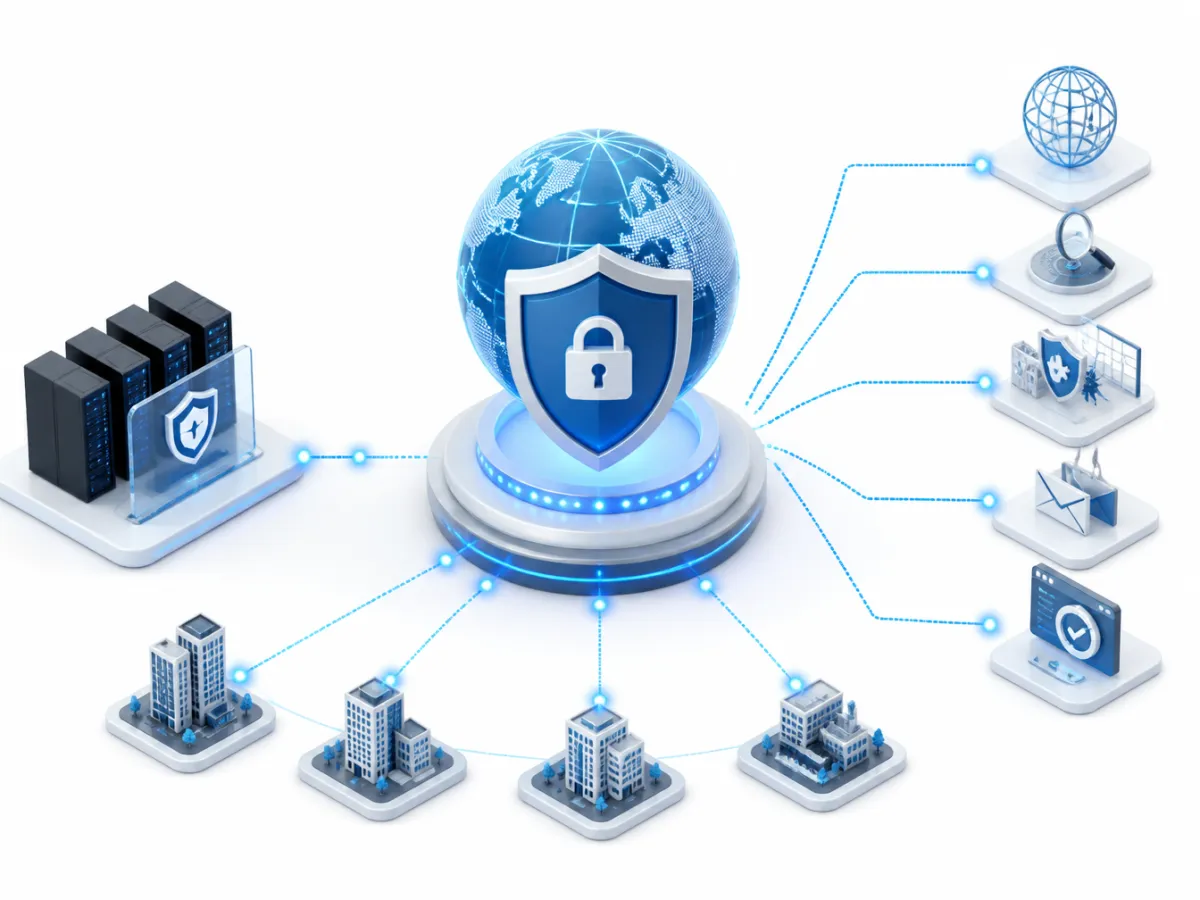
If scanners and validation tools share the same IPv4 space as employees, mail systems, or customer portals, the company may create attribution gaps, reputation damage, and operational noise.
Cybersecurity scanning infrastructure separation is a network design approach that places scanners, test nodes, and validation tools on dedicated IPv4 ranges outside normal corporate traffic. It helps security teams isolate scanning behavior, protect production reputation, simplify logs, control outbound exposure, and respond to complaints without affecting employee or customer networks.
Why should teams separate scanning infrastructure from daily networks?
Teams should separate scanning infrastructure because scanning can look aggressive to external systems. Vulnerability discovery, asset inventory, exposure checks, and control validation may trigger rate limits, IDS alerts, abuse reports, or destination-side blocks.
A separate range gives security and network teams a clear source identity. It shows which traffic came from approved testing and which came from users, applications, or compromised endpoints.
Separation also helps define:
- who may run scans and under which approval;
- which destinations, ports, and protocols are allowed;
- how scan windows are scheduled and logged;
- when a scan must stop or be paused;
- who handles external complaints.
How does corporate network scanning create risk?
Corporate network scanning creates risk when test traffic leaves the same ranges that support business services. A third-party platform may block the company’s email gateway, VPN exit, customer portal, or API endpoint because it associates those addresses with scanning behavior.
The risk is not only technical. Legal, compliance, and support teams may need evidence that a scan was authorized, scoped, and separated from customer activity.
What role does scanning infrastructure ipv4 play in visibility?
Scanning infrastructure ipv4 gives each scan source a stable and traceable network identity. Security teams can label these ranges in SIEM, firewall logs, IPAM, DNS, proxy records, and incident reports.
A practical setup can include:
- assign a dedicated IPv4 range to scanning and validation tools;
- register ownership, purpose, and approvers in IPAM;
- create DNS and rDNS records that match internal naming rules;
- apply outbound firewall rules and traffic limits;
- send logs to SIEM with range-specific labels;
- review abuse reports, blocks, and scan results after each test cycle.
If a company needs temporary capacity for a specific assessment, it can lease IPv4 addresses for a controlled test period.
Why does cybersecurity separate scanning infrastructure for governance?
Cybersecurity separate scanning infrastructure supports governance because scanning needs accountability. Security leaders should know which team owns the scanner, what scope was approved, which assets were tested, and which source addresses were used.
Governance records should include:
- business purpose and approved test scope;
- scanner owner, tool owner, and escalation contact;
- allowed targets and excluded systems;
- time window and expected traffic volume;
- retention rules for logs and findings;
- exception approval for high-risk tests.
These records help the company prove that scanning was controlled network activity.
How does cybersecurity scanning infrastructure separation protect reputation?
Cybersecurity scanning infrastructure separation protects reputation by preventing scanning behavior from contaminating corporate address ranges. If a destination blocks the scanning subnet, the block should not affect employee access, production APIs, or customer-facing systems.
What should teams check before separate scanning infrastructure corporate networks projects?
Before teams separate scanning infrastructure corporate networks, they should review technical and policy dependencies. A dedicated range is useful only when routing, monitoring, and access control are also separated.
Key checks include:
- route origin, upstream path, and geolocation behavior;
- firewall, WAF, proxy, and VPN boundary rules;
- DNS, rDNS, certificate, and tool configuration;
- abuse mailbox and external complaint handling;
- monitoring dashboards and alert ownership;
- lifecycle status after each testing campaign.
If scanning becomes a long-term program with stable capacity needs, the company may buy IPv4 blocks and keep scanning ranges under permanent internal control.
Why is separating scanning from corporate networks important after testing?
Separating scanning from corporate networks remains important after testing because residual effects can last. Blocklist entries, security feed signals, partner alerts, and abuse tickets may appear after the scan window closes.
The team should review logs, close exceptions, archive approvals, and mark the range as active, paused, quarantined, or ready for the next authorized test.
When isolated IPv4 bandwidth is required for security scanning, IPv4 Online can be leveraged to support lease or purchase planning, address readiness checks, and documentation for controlled testing. This helps cybersecurity teams separate scan traffic from corporate networks while keeping routing, reputation, and governance risks visible.