Lease dedicated IPv4 for security operations
Need stable public address space for threat intelligence, attack surface monitoring, sinkholes, honeypots, or external validation nodes? Leasing fits when you need repeatable source ranges and controlled exposure, but you do not want to tie up budget in a purchase yet.
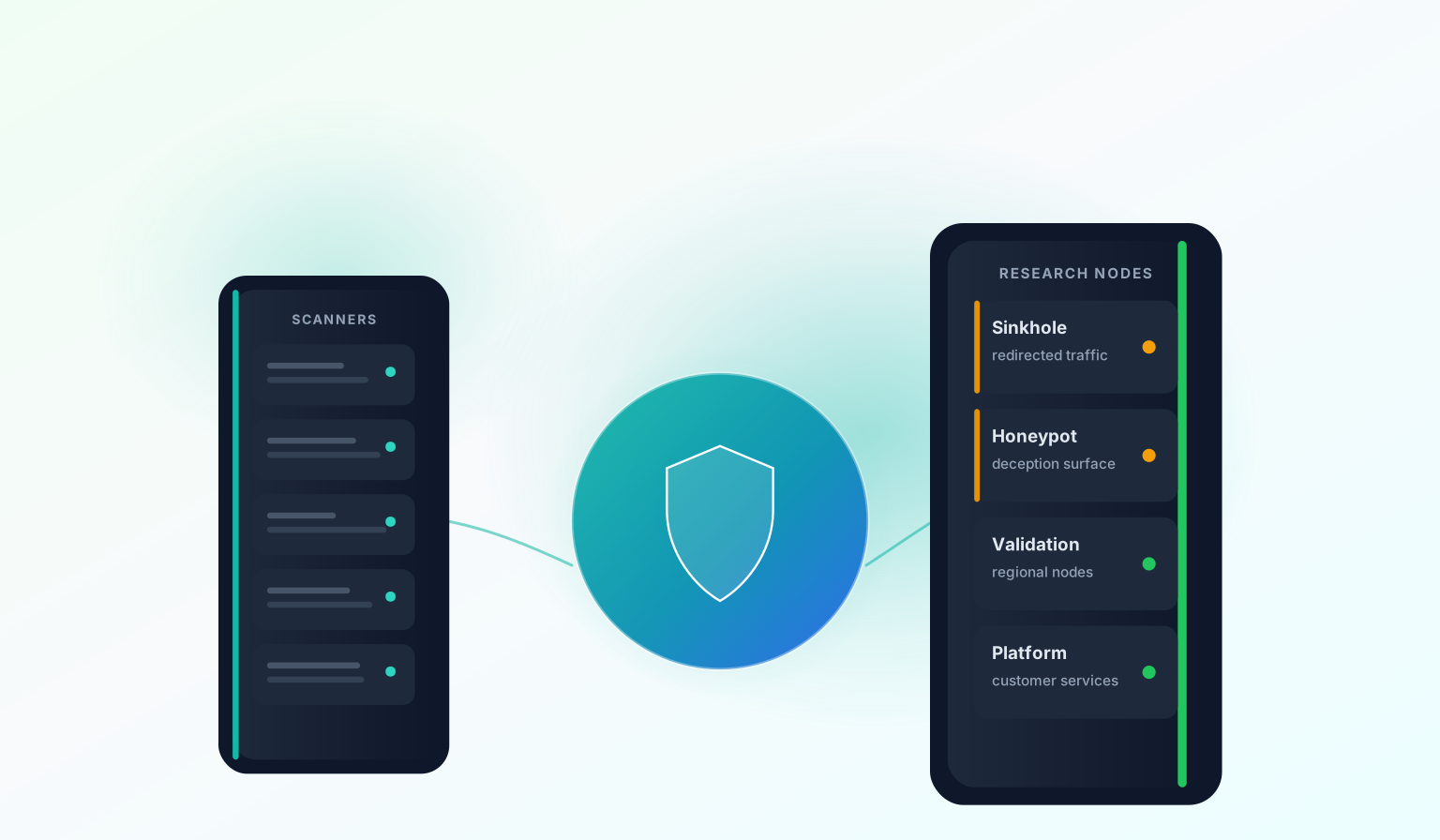
Cybersecurity teams often need a tiered IPv4 approach
Most security teams do not treat every public range the same. They keep owned space for long-lived platforms and prefixes they want under their own routing policy, lease dedicated blocks for scanners, sinkholes, and regional validation nodes, and use short-term rentals when an investigation or campaign has a clear end date. If a new research program needs routable space next week, leasing is usually faster than a transfer and easier to phase out if the need disappears.
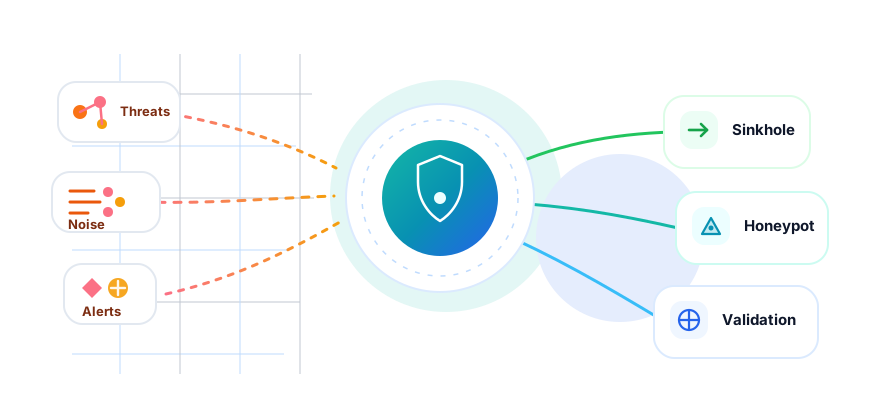
Where dedicated IPv4 tends to matter in cybersecurity
Internet-wide scanning and ASM
Threat intelligence collectors
Sinkholes and takedown operations
Honeypots and deception labs
Regional validation nodes
Managed security platforms
Typical case: a security team needs fixed public ranges for scanners and validation nodes
A new attack surface monitoring rollout or threat research program needs known source IPs in more than one region. Customers want those ranges documented up front, partners may need them allowlisted, and your own team needs to distinguish scanner traffic from normal corporate egress. Rotating ad-hoc space creates friction fast. A fixed-term lease gives you dedicated ranges you can announce, document, monitor, and retire cleanly.
What matters when a security team sources IPv4 through our marketplace
When a team is running scanners, sinkholes, honeypots, validation nodes, or customer-facing security infrastructure, the question is rarely just “how many IPs?” It is whether the ranges are stable, whether they can be documented cleanly, whether separate programs can stay segmented, and whether you can avoid mixing research traffic with customer traffic.
You can review listed supply by size, region, term, and price, then choose dedicated ranges that fit your routing model and operational boundaries. Security programs get messy when every project shares the same small pool or when source IPs change without warning.
Frequently asked questions
When should cybersecurity teams lease IPv4 vs buy addresses?
What cybersecurity workloads need dedicated public IPv4?
Why does fixed address space matter in security operations?
What block size is typical for cybersecurity teams?
Does RPKI matter for cybersecurity infrastructure?
What matters besides price when choosing a block?
Need IPv4 for cybersecurity?
Tell us what the range will be used for, where it needs to be announced, and how long it needs to stay stable. We'll help you compare dedicated IPv4 for threat intelligence, scanning, sinkholes, honeypots, and validation nodes.