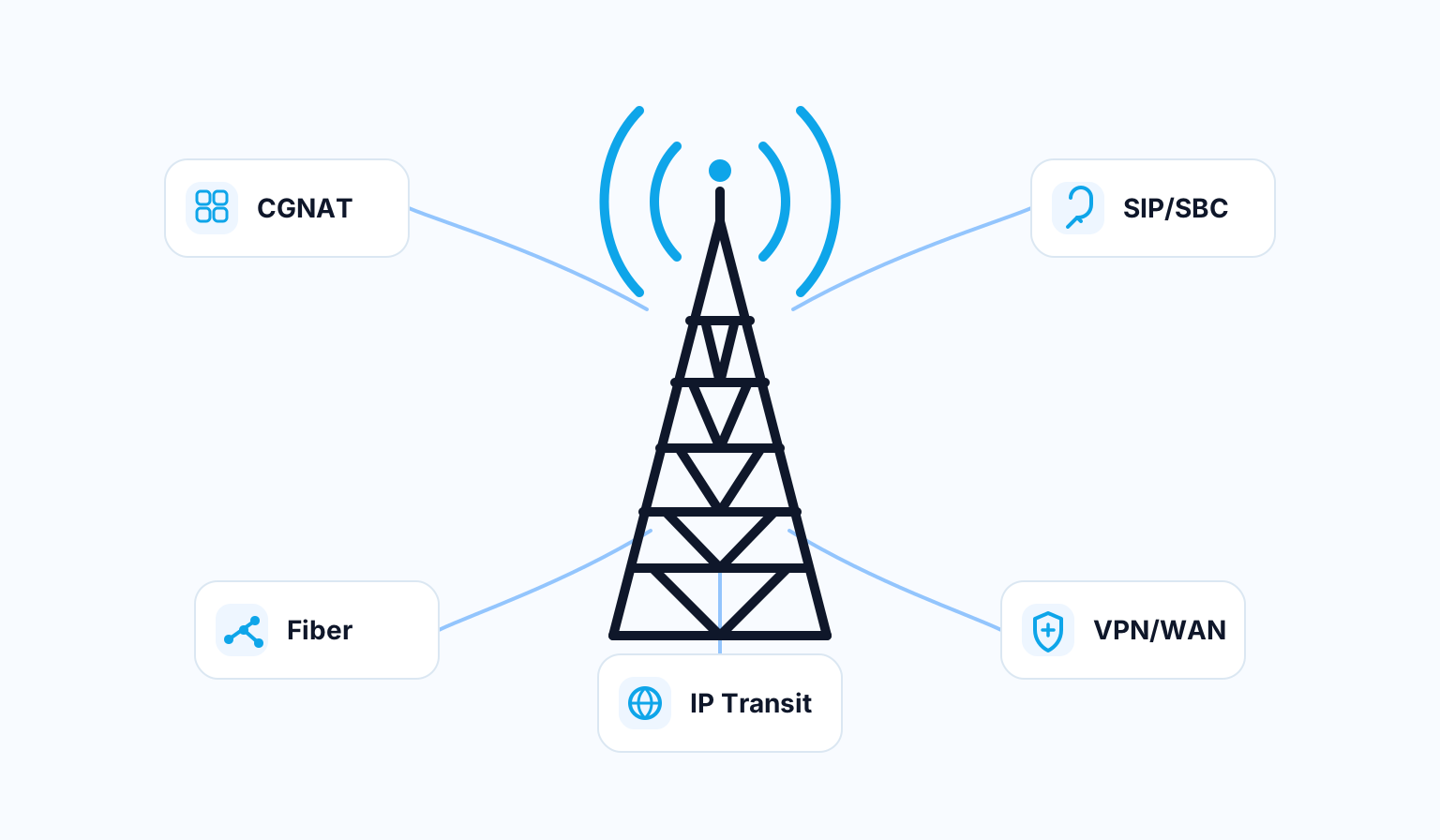
Why do telecom operators and ISPs still need IPv4 if they already run CGNAT and IPv6?
Because CGNAT stretches addresses; it does not eliminate public IPv4. ISPs still need public pool space for NAT egress, business internet with static IPs, IP transit and partner interconnect handoffs, VoIP, SIP and SBC platforms, managed services, and customer exceptions that break on shared addressing. Dual-stack lowers pressure, but it does not remove IPv4 from the product mix.
When should a telecom operator lease IPv4 vs buy addresses?
Lease when the network is growing now but the long-term baseline is still unclear: new FWA markets, fiber buildouts, business service expansion, CGNAT pool growth, or post-acquisition integration. Buy when the block will stay in your core inventory for years and you want it under your own RIR account. Many operators do both: owned space for the baseline and
leased IPv4 for rollout and buffer.
What telecom workloads usually need dedicated public IPv4?
Common examples are CGNAT public pools, business broadband with static IPs, managed firewalls and VPN services, VoIP, SIP and SBC edges, IP transit and partner interconnects, customer allowlist ranges, public service endpoints, and regional infrastructure that must stay reachable during rollout or migration.
What block size is typical for an ISP or broadband operator?
A /24 is the smallest widely routed public block and the usual starting point for a contained service pool or pilot market. Operators planning CGNAT growth, business internet products, or regional launches often look at /23, /22, or larger blocks so they are not back in procurement after the next subscriber step-up.
Can telecom operators monetize unused IPv4 too?
Yes. It is common to have pressure in one part of the network and idle legacy space in another, especially after M&A, product changes, or market exits. If a block is not strategically needed, it can often be
leased out instead of sitting dark.
What matters besides price when choosing a block?
For telecom use, contract length, route history, geolocation, RIR region, ASN fit, LOA and ROA readiness, RPKI support, abuse handling, and activation speed matter as much as the monthly rate. A cheap block that creates false abuse noise or slows routing work is not cheap for long.